
Tunisia & Algeria
13-31 March 2027
Dr Helen Pope
Take a journey across Algeria and Tunisia, two prominent countries of the ancient world, and discover the Numidian, Phoenician, Carthaginian and Roman societies that shaped the Mediterranean.
OVERVIEW
The extraordinarily rich history, art and architecture of the Roman Empire had a deep impact on the African countries of Algeria and Tunisia. Its influential trading outposts, grand amphitheatres and life-giving aqueducts gave rise to the wealthiest province in the Western Roman Empire outside of Italy, a legacy that remains visible today.
This 19-day tour surveys Roman North Africa and traces the historical legacy of Rome after the fall Carthage, and the later impact of Byzantine and Islamic cultures in both countries. Starting our journey in Tunis, we explore the vibrant medina and ancient Carthage, Rome’s greatest rival and the legendary dominion of Queen Dido, and discover the grandeur of imperial Rome at the remarkable ampitheatre in El Djem. We then discover a fascinating insight into life in Roman North Africa at Dougga, Bulla Regia and Chemtou, the largest marble quarry in ancient North Africa and chart the rise of Islam on the region in the holy Umayyad city of Kairouan, whose huge mosque is a masterpiece of Islamic architecture.
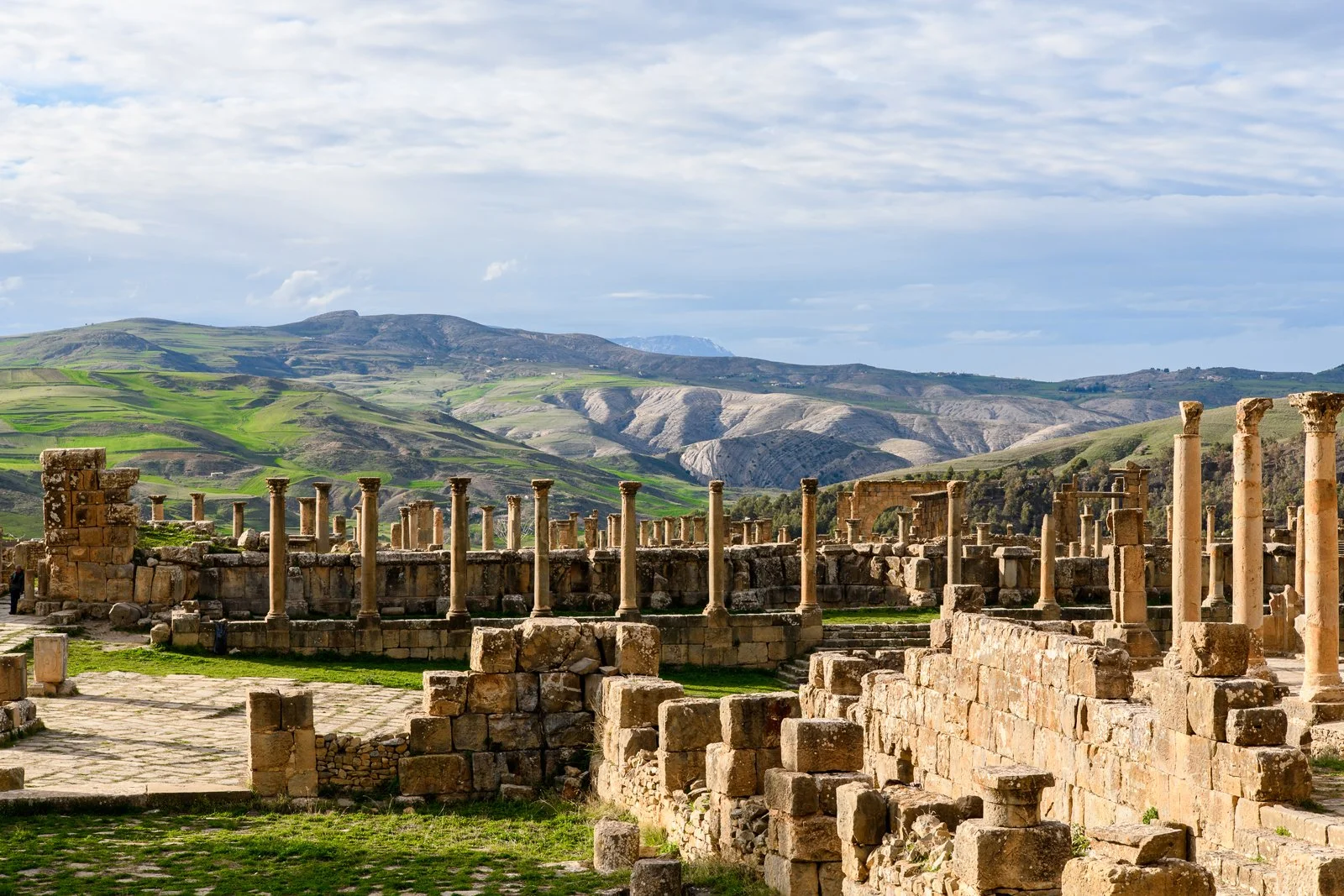
From Tunis we fly to Algeria, Africa’s largest country. We explore the colourful Casbah in Algiers, enjoy the wild and romantic site of Tipasa (much beloved by Camus), and visit the astonishing museum at Cherchell, ancient Caesarea. We then travel to two of the most breathtaking Roman cities in North Africa, Timgad and Djemila, and bathe in the ancient Roman baths at Khenchela, which are still in use after 2000 years, before arriving in Constantine, the city of bridges.
The tour is complemented with insightful talks and the expertise of your tour leader, Dr Helen Pope, an experienced tour leader with a deep passion for classical literature.

TOUR LEADER
Dr Helen Pope has a PhD in Latin and has taught Classics at St Stephen’s International School in Rome for over thirty years. Helen’s passion for Rome and the ancient world began at a very early age, leading her to study classics at Monash University. For five years, she taught in the Visual Arts department at Monash University, and she has led numerous tours for students as well as for adults to North Africa, Türkiye and the Middle East.
“Helen is not only a very knowledgeable person, but also friendly and easy to talk with, helpful in every respect.”
- Tour participant, Tunisia and Algeria, 2026

DETAILS
DATES:
13-31 March 2027
ITINERARY:
Tunis (2n) – Sousse (2n) - Kairouan (2n) - Dougga (2n) - Tunis (1n) -Algiers (3n) - Constantine (2n) - Timgad (1n) - Setif (2n) - Algiers (1n)
PRICE:
$16,150pp twinshare
SINGLE SUPPLEMENT:
$1,790 for sole use of a double room
DEPOSIT:
$1,500pp at time of booking
SECOND DEPOSIT:
$2,500pp due on 13 November 2026
FITNESS:
Above moderate: long days, archaeological sites, standing in museums, one-night stays
GROUP SIZE:
Max. 16 places
GETTING THERE:
The tour starts in the lobby of our hotel at 6.00pm on 13 March 2027
-
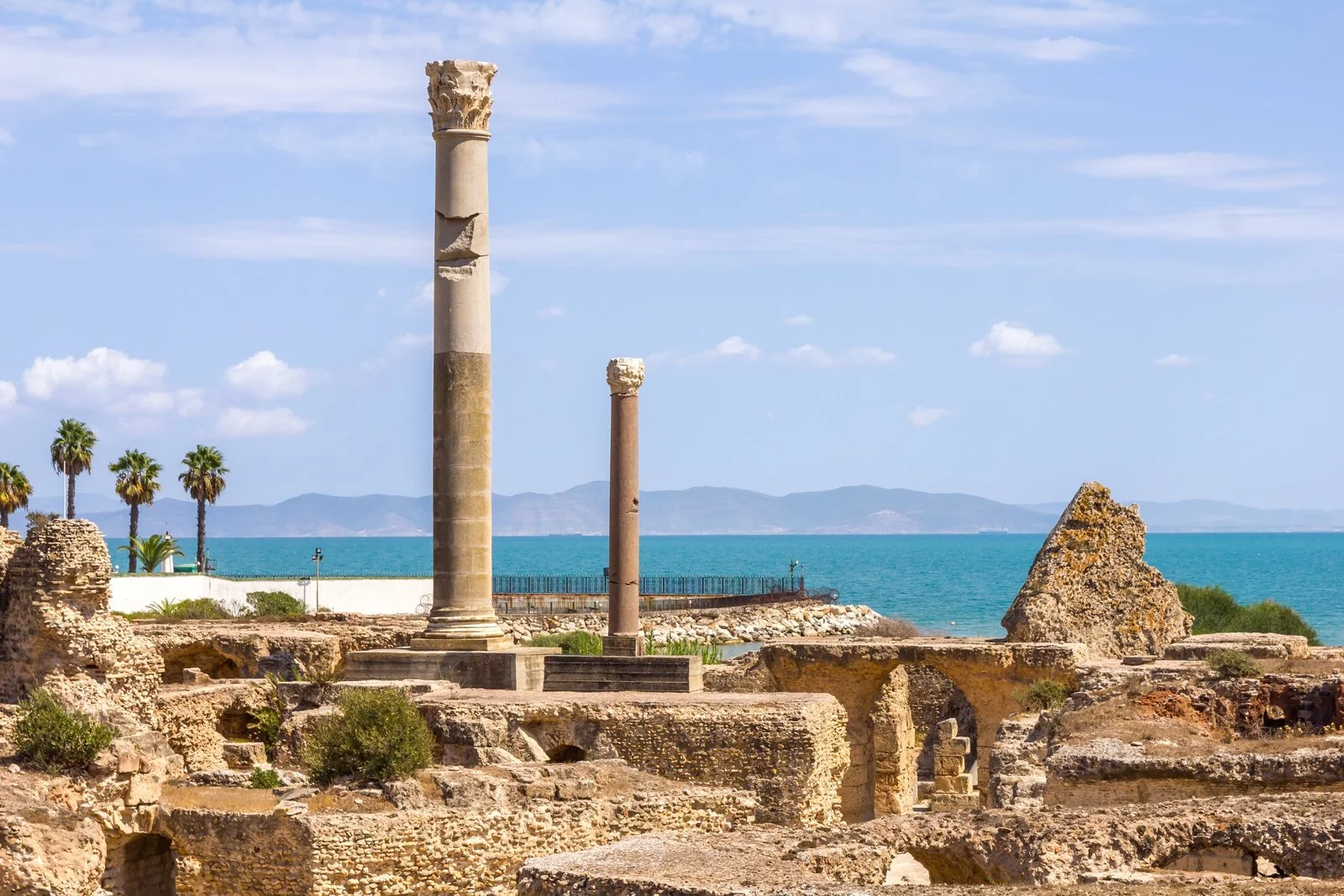
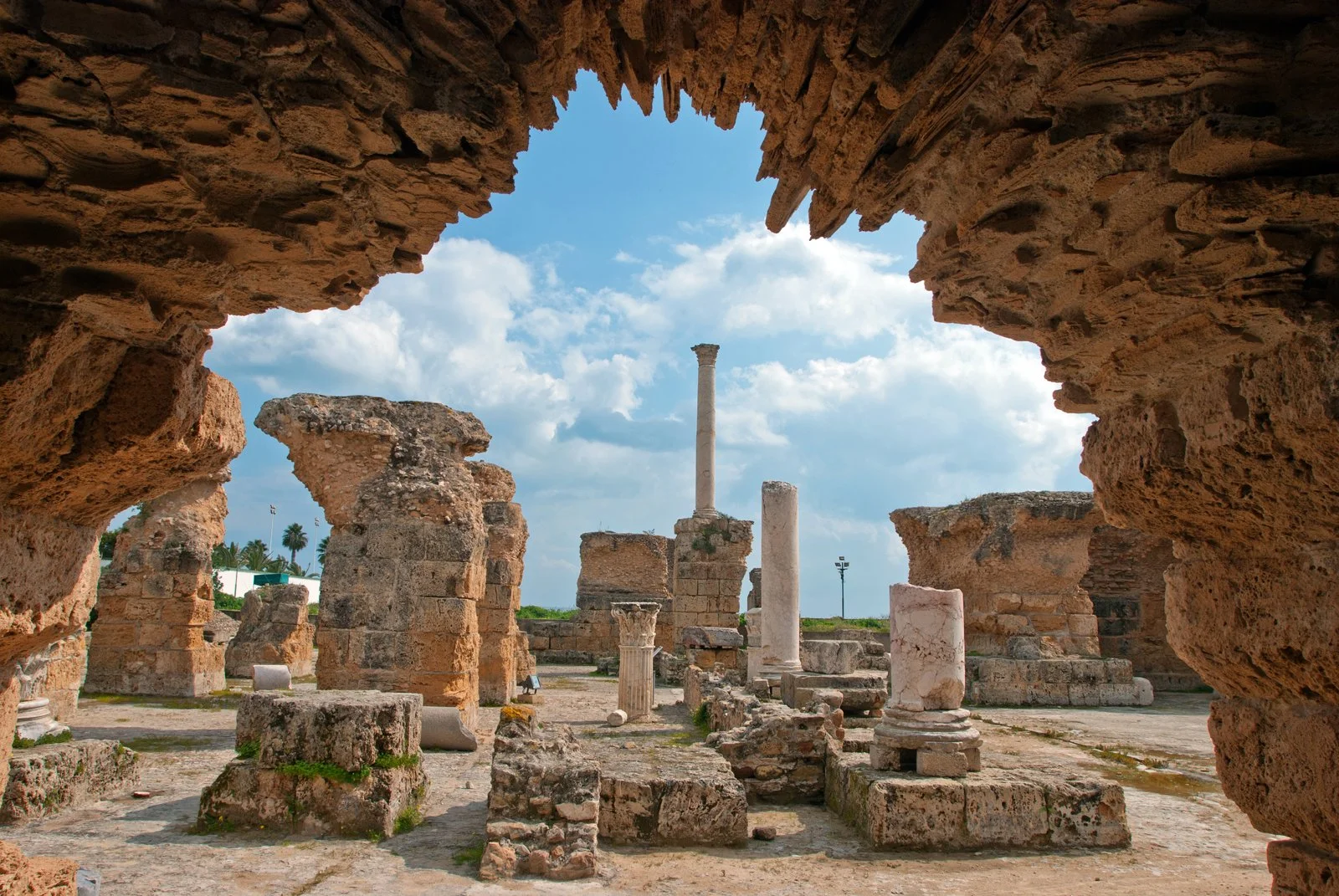
Survey the great port of Carthage, centre of a powerful Mediterranean empire that rivalled Rome.
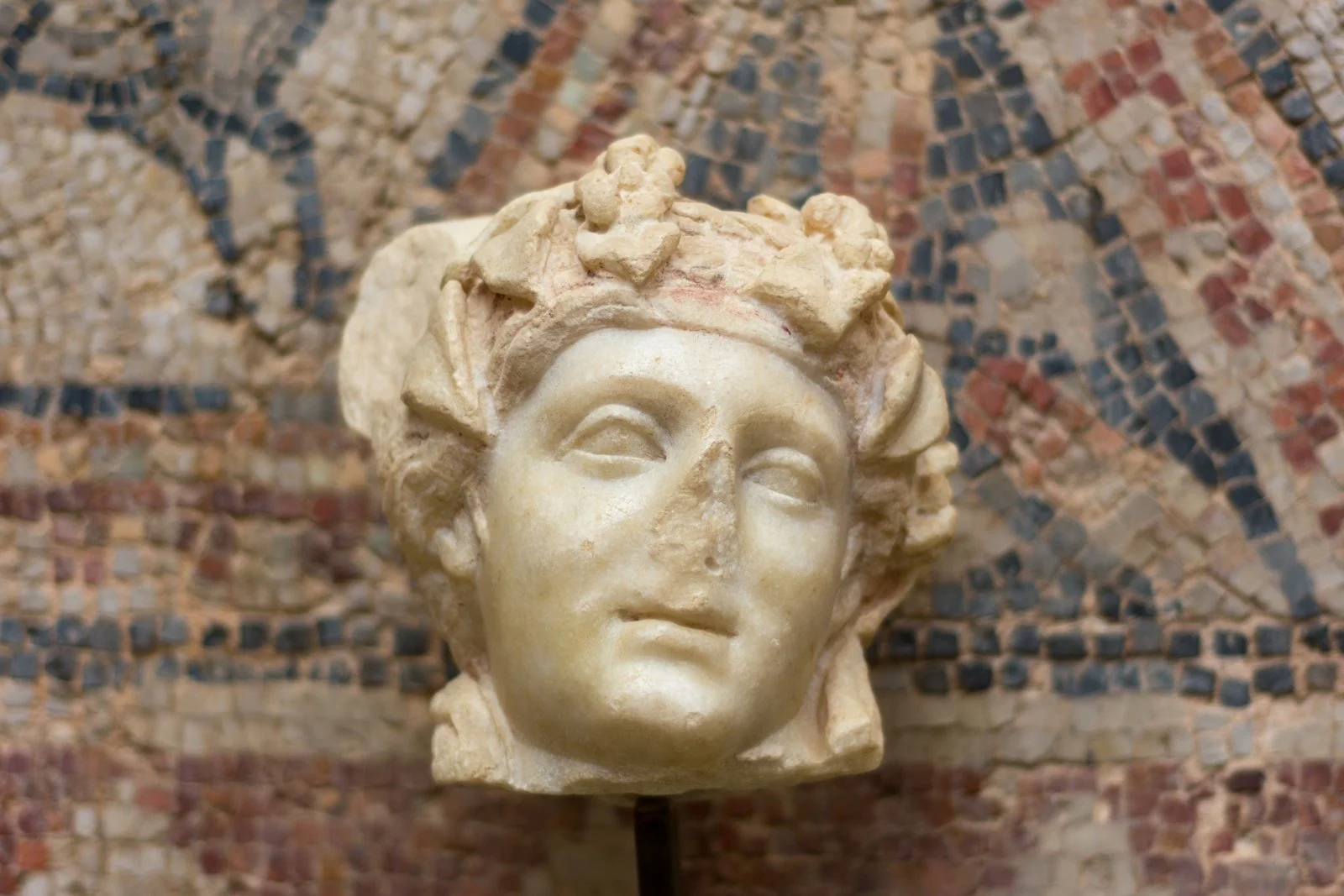
Admire the immense wealth of African and Roman art and history at exceptional archaeological museums including the Bardo, El Djem Sousse and Setif
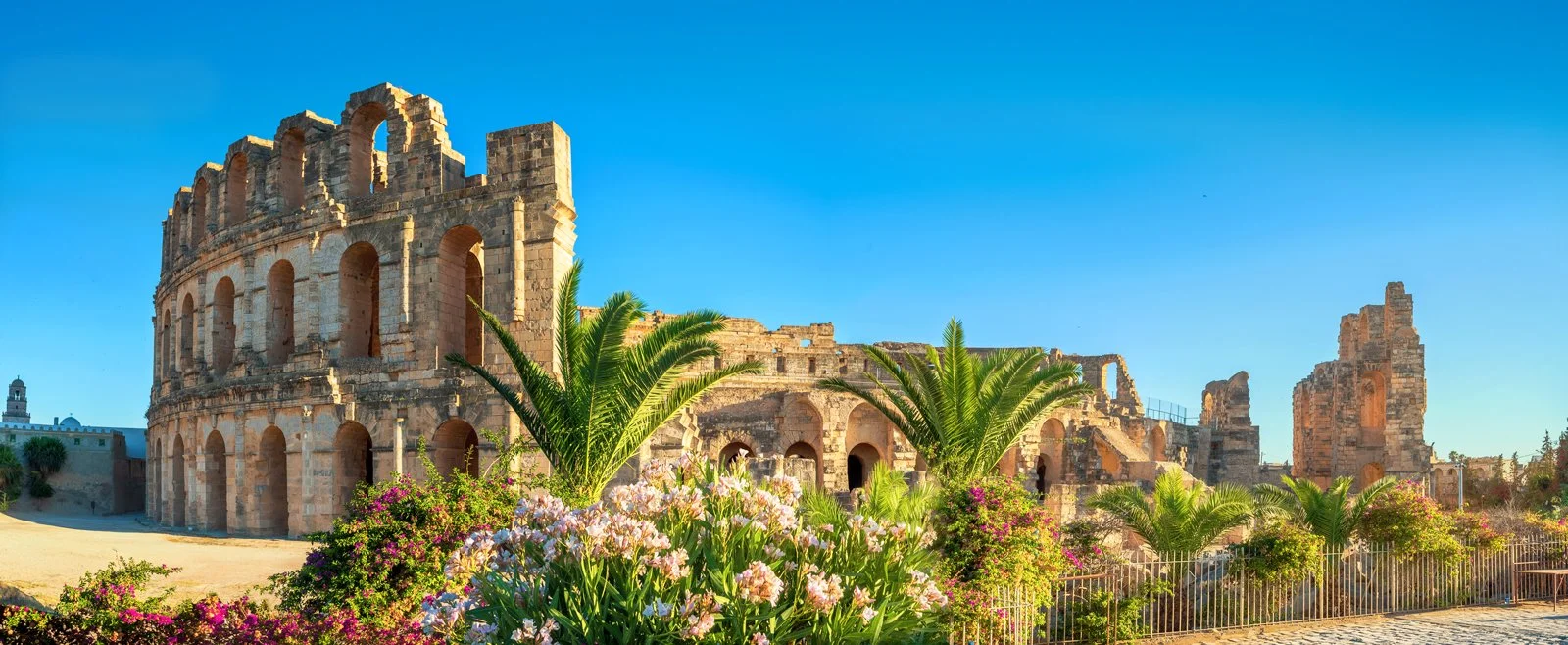
Imagine the deafening roar of 35,000 spectators baying for blood at the stunningly intact colosseum in El Djem
Chart the rise of Islam at the Great Mosques of Kairouan and Constantine
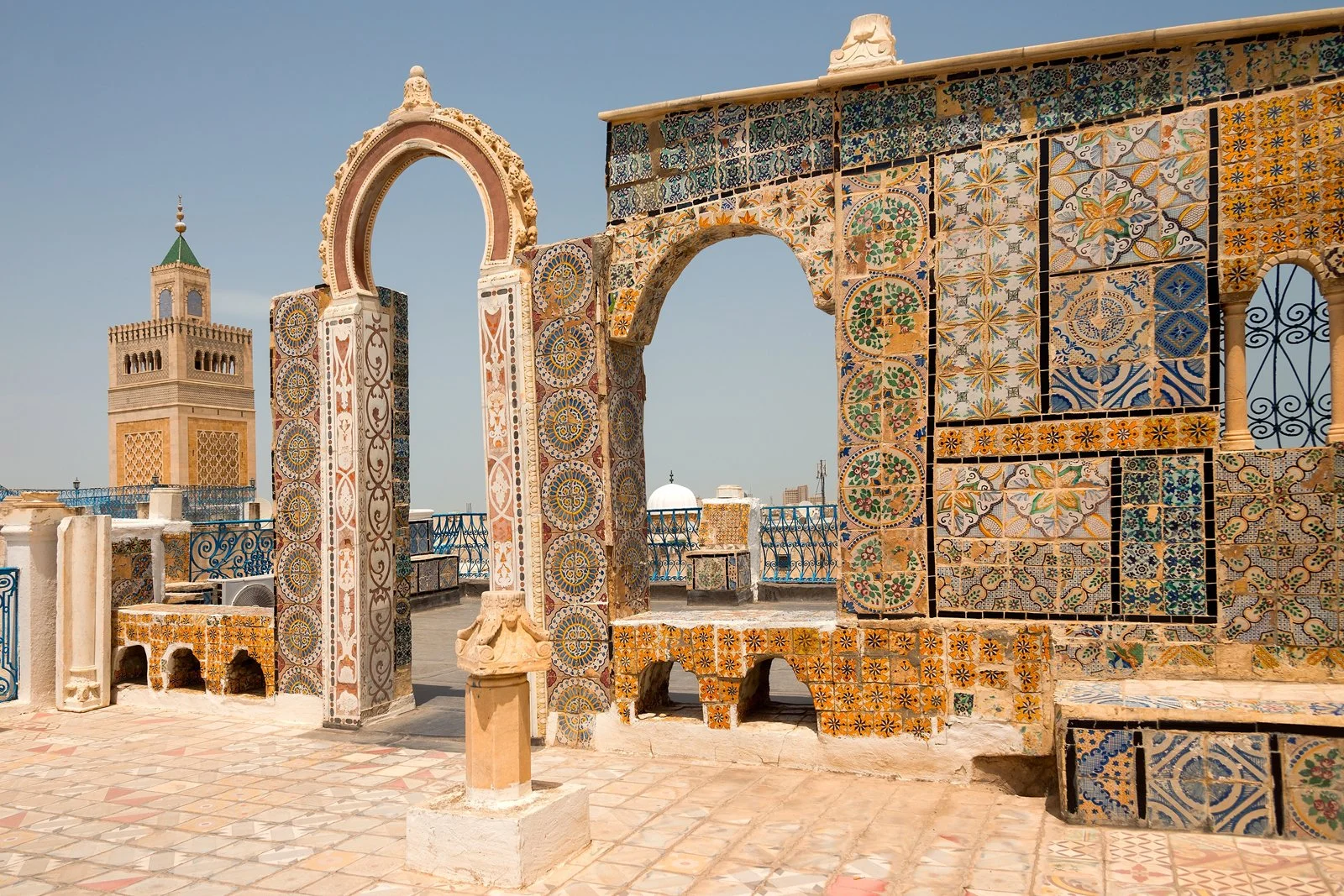
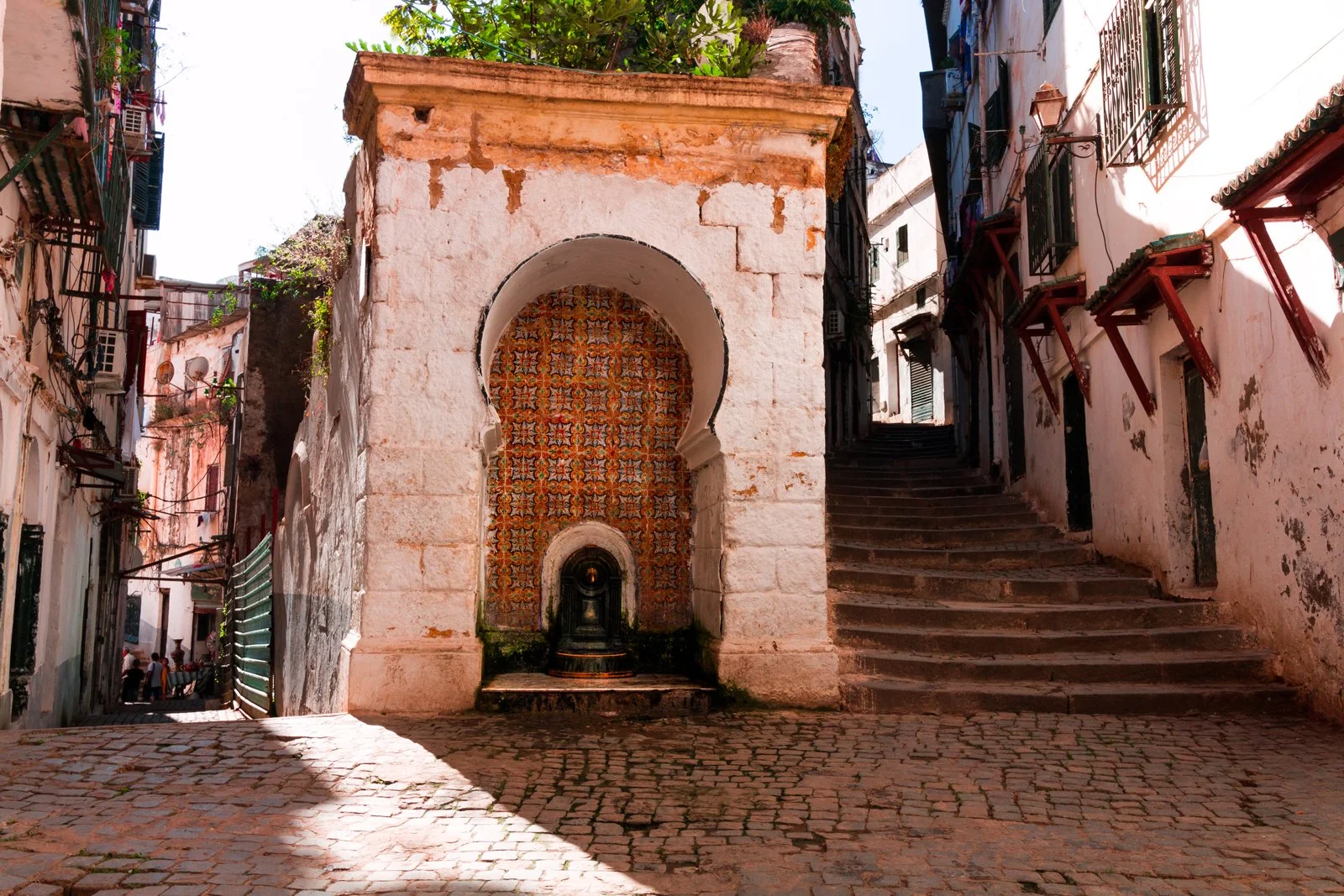
Wander through the lively medinas and souks in Tunis, Sousse and Kairouan and the colourful Casbah in Algiers
-
SATURDAY 13 MARCH – ARRIVE IN TUNIS (D)
An arrival transfer from Tunis-Carthage International Airport is included for all participants; contact us for further information. Meet tour leader Dr Helen Pope and your fellow travellers at 6.00pm in the lobby of our hotel in Tunis for welcome drinks and dinner. Overnight Tunis.SUNDAY 14 MARCH – THE MEDINA & BARDO MUSEUM (B, L, D)
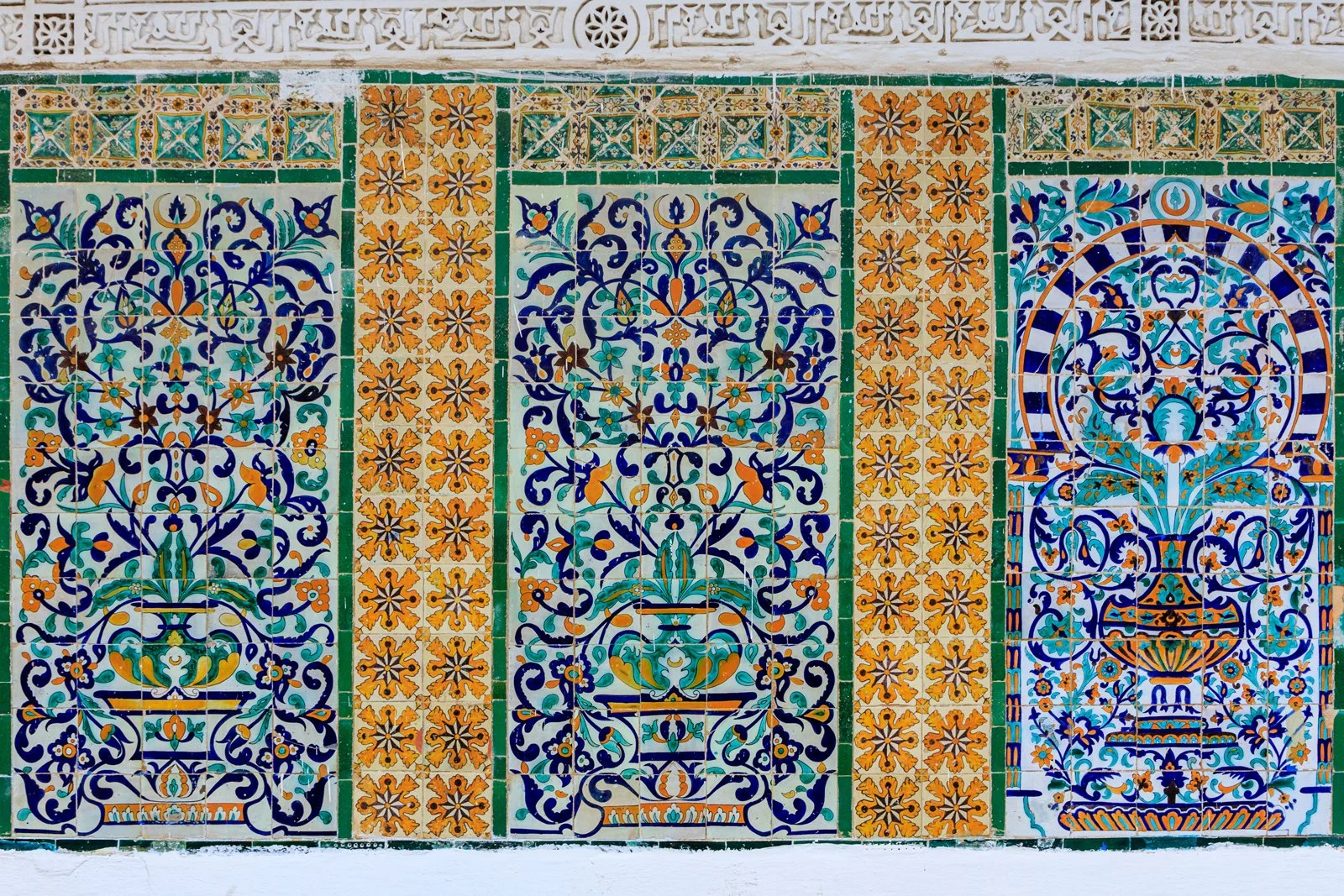
As the capital of several influential dynasties, including the Almohads and Hafsids, Tunis was considered one of the greatest and wealthiest cities in the Islamic world. We explore this heritage today, commencing at the National Bardo Museum, an impressive showcase of Tunisian heritage housed in a nineteenth-century Ottoman palace. The staggering number of exceptional Roman mosaics, Hellenistic sculptures and Punic jewellery on display paints a fascinating portrait of North African civilisation. After lunch we take a walking tour through the UNESCO-listed Medina and encounter historic palaces, mosques, madrassas, mausoleums and houses, lavishly decorated with reflective tiles and stucco, as well as a busy souk laden with all manner of merchandise. Afterwards, we return to the hotel for a talk by Helen before we enjoy dinner together. Overnight Tunis.MONDAY 15 MARCH – CARTHAGE (B, L)
After a talk in the hotel this morning, we check out and travel to the fallen city of Carthage. The ancient Phoenician city was founded in the ninth century BCE and rose to become a powerful, rich and influential trading metropolis and key maritime power throughout the Mediterranean. It was vanquished by the Romans in 146 BCE, as part of the ongoing Punic Wars. Rebuilt a century later as Roman Carthage, it became the Empire’s major city in North Africa. We explore the vestiges of Punic, Roman, Vandal, Christian and Arab civilisations here, including the massive necropolis, Roman theatre and residential areas that comprise this extensive archaeological site. After lunch we travel to the coastal city of Sousse arriving in the late afternoon and check into our seaside hotel. Overnight Sousse.TUESDAY 16 MARCH – SOUSSE (B)
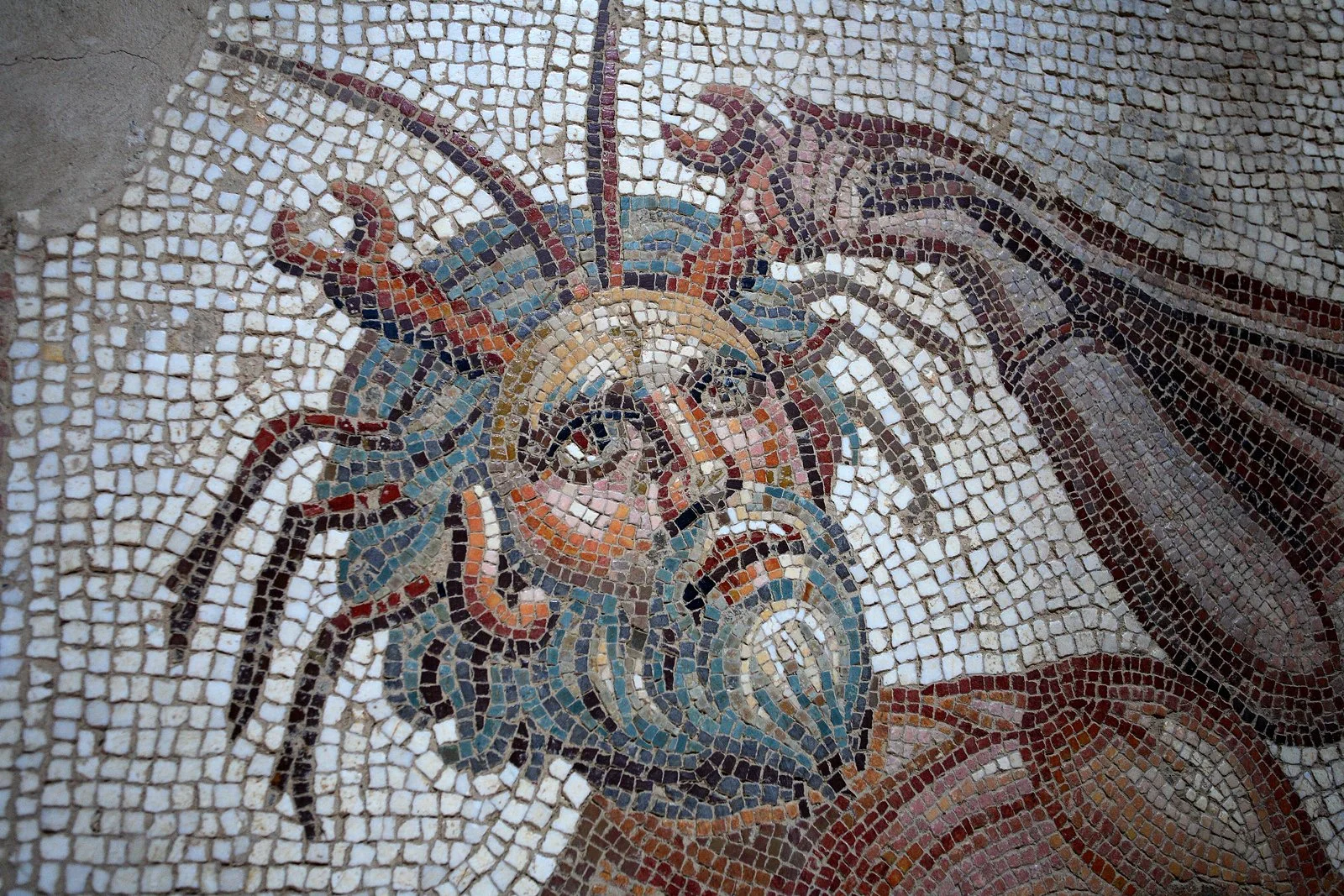
This morning we visit the small but splendid Sousse Archaeological Museum and discover the collection of second- and third-century Roman mosaics which depict charming scenes from daily life. Highlights include a richly coloured mosaic of Neptune in his chariot drawn by Hippocamps, and Bacchus riding in chariot driven by satyrs and pulled by tigers. In the afternoon, there is time to explore the narrow streets of the medina, a fine example of Islamic architecture. Afternoon and evening at leisure. Overnight Sousse.WEDNESDAY 17 MARCH – EL DJEM (B, L, D)
After checking out this morning, we encounter the full grandeur of imperial Rome in North Africa on our visit to the Amphitheatre of ElDjem. Built in the third century, the impressive free-standing three-tiered amphitheatre is constructed of stone blocks with no foundations. It was modelled on its famous counterpart in Rome and had a capacity of 35,000 spectators. We then visit the Archaeological Museum, which is built on the footprint of a Roman villa and displays an exceptional collection of mosaics, including scenes depicting gory gladiatorial battles, mythical gods and Roman-era art. Mosaics were an important decorative feature across the Roman Empire, in public spaces as well as private homes, and we gain a sense of the craftmanship required for this medium on a visit to a local artisan’s workshop. After lunch we travel to Kairouan, a holy city for Islam, and check in to our hotel. In the evening we dine in a local restaurant. Overnight Kairouan.THURSDAY 18 MARCH – ISLAMIC KAIROUAN (B)
Kairouan has long been the Maghreb’s most ancient and holy city, with the Grand Mosque lies at the heart of Islam in northern Africa and is the fourth holiest site for the faithful after Mecca, Medina and Jerusalem. Founded in 670, the expansive complex we visit today was rebuilt by the Aghlabids in the ninth century. A large minaret looms over the courtyard, whose pillars and horseshoe arches display the influence of Roman, Islamic and Byzantine architecture. We continue to the Zaouia of Sidi Sahab, a mosque, madrassa and mausoleum complex. Also known as the Barber’s mosque, it is the final resting place of Sidi Shab, a close companion of the prophet Mohammed, who died in battle. Legend holds that he was buried here along with three hairs from Mohammed’s beard. The afternoon is at leisure for exploring the narrow streets of Kairouan’s souk, with its characteristic whitewashed houses sporting arches and shutters vibrantly painted in blue and green. Overnight KairouanFRIDAY 19 MARCH – DOUGGA (B, L, D)
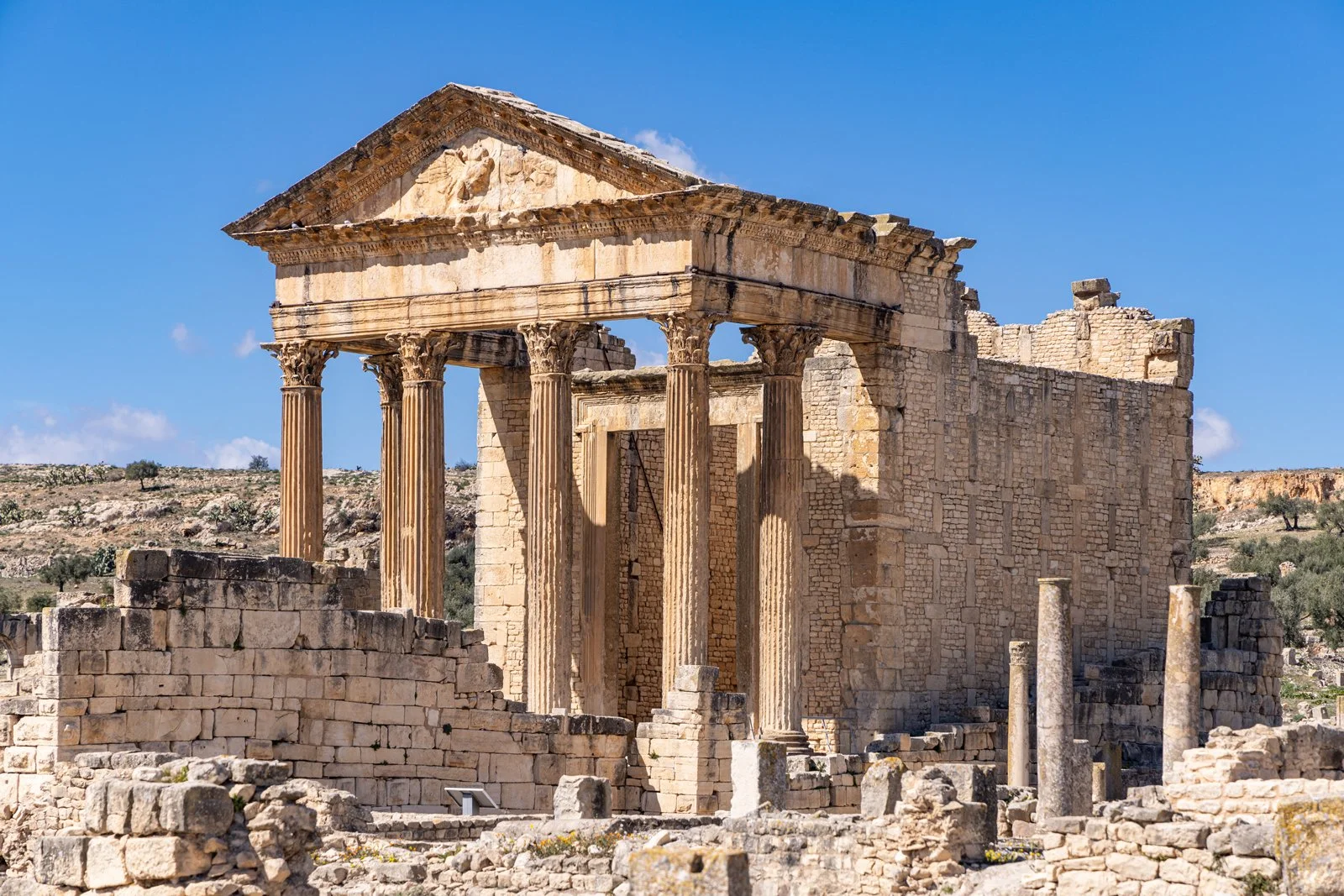
After we check out this morning, we visit a Commonwealth War Cemetery that commemorates the fallen soldiers of the Allied First Army, whose campaign in North Africa resulted in the defeat of the Axis in April 1943. We then travel to Dougga, an ancient hilltop settlement where we find excellent examples of the influence successive cultures, from Numidia to Carthage and the Rome. The well-preserved site comprises bathhouses, an imposing capitol and theatre, that exemplify how inhabitants flourished under Roman rule. We enjoy lunch together today, as well as dinner in our hotel this evening. Overnight Dougga.SATURDAY 20 MARCH – CHEMTOU & BULLA REGGIA (B, L, D)
Today we take a day trip to Chemtou and Bulla Reggia. Chemtou was the source of a pink-veined marble valued highly throughout the Roman Empire – including in Rome itself – thanks to its resemblance to gold. At the excellent archaeological museum, we learn of the mechanisms used to carve out and transport the delicate stone blocks and admire examples of quarried marble. Continuing to Bulla Reggia, we find the first known Roman villas that were constructed underground to escape the heat. These subterranean villas can be visited, their intact plumbing and mosaic-covered colonnaded courtyards offering a superb insight into life at the time. The city also contains a beautifully preserved theatre, forum and temple of Apollo. Returning to Dougga, we have dinner in the hotel. Overnight Dougga.SUNDAY 21 MARCH – TO TUNIS (B, L)
We return to Tunis this morning calling in at the picturesque village of Testour perched on the hills of the Medjerda Valley. The town’s Andalusian heritage is apparent in its architecture, influenced by Jewish and Muslim refugees expelled from Spain under the reign of King Phillip III in the 1600s. A unique feature of the mosque is the clock that mysteriously runs counterclockwise. After lunch and an olive oil tasting we continue to Tunis, where the evening is at leisure. Overnight Tunis.MONDAY 22 MARCH – TO ALGIERS (B, D)
We depart Tunisia today and board a flight to Algiers our base for the next three nights. After checking in to our hotel, there is a talk by Helen before dinner in a local restaurant. Overnight Algiers.TUESDAY 23 MARCH – ALGIERS (B, L)
The Casbah of Algiers is an outstanding example of a historic Maghreb city, with the citadel forming part of the ramparts. We walk through the labyrinthine streets, lined with Ottoman-style palaces, and the seventeenth-century Ketchaoua Mosque, noted for its blend of Moorish and Byzantine architecture. At the magnificent Palace of Mustapha Pacha we encounter a fascinating collection of illuminations, miniatures and calligraphy. Our tour this morning concludes at Martyr’s Square. After lunch together, we visit the National Museum of Fine Arts, next to the Jardin d’Essai of El Hamma, which preserves Algeria’s cultural legacy and national identity. Over three levels, the collection covers the arts and crafts of the Arab world, Algerian artists and the works of French masters, such as Matisse and Gauguin. There is time to wander through the botanical garden before we return to the hotel for a talk by Helen. Evening at leisure. Overnight Algiers.WEDNESDAY 24 MARCH – TIPASA AND CHERCHELL (B, L)
Today we visit Cherchell,an illustrious former Roman coastal colony known as Caesarea and the capital of the Kingdoms of Mauretania and Numidia. Here, we can see what remains of the theatre built by Juba II, the forum and the western baths. At the museum we gain a detailed picture of life in the colony through displays of sculpture, mosaics and marble busts of the royal family – including a portrait of Juba’s mother-in-law, Cleopatra of Egypt. We then continue along the coast to Tipasa for lunch overlooking the Mediterranean and a visit to its museum before continuing to the scenic archaeological park. One of North Africa’s finest, the site is fabulously set against the backdrop of the Mediterranean. The day concludes with a visit to the Royal Mausoleum of Mauretania. The grandeur and architecture of the circular structure, decorated with Ionic columns, gives credibility to the belief that this was the burial place of Queen Cleopatra and Mark Antony’s daughter, Selene II, and her husband King Juba II. Returning to the hotel, the evening is at leisure. Overnight Algiers.THURSDAY 25 MARCH – TO CONSTANTINE (B, L)
Today we depart for Constantine perched above the dramatic Rhummel Gorge and known as the ‘City of Bridges’. Ancient Constantine was an important town and the capital of the Kingdom of Numidia until it was settled by the Romans under the reign of Julius Caesar. We break for lunch in Setif before we arrive in Constantine and check into our hotel. This evening is at leisure. Overnight Constantine.FRIDAY 26 MARCH – CONSTANTINE (B, L)
This morning we head to the dramatic site of Tiddas, situated on a barren mountain slope. Settled by Neolithic Berbers, it was developed into a fortress town during the Augustan era. We then return to Constantine to visit the Cirta Museum, which displays finds from the period in which the city was part of the Kingdom of Numidia. We also admire artefacts from Tiddas, including an exquisite second-century BCE marble bust of a woman known as the Beauty of Djemila. A stroll through the city after lunch brings us to the Palace of Ahmed Bey, where the ruler of Constantine constructed a fine Ottoman-era palace decorated with French and Tunisian tiles to celebrate his pilgrimage to Mecca. Later, we visit the city’s most prominent monument, the Emir Abdelkader Mosque, distinguished by twin 107-metre-high minarets and a prayer hall that can host up to 10,000 worshippers. This evening is at leisure. Overnight Constantine.SATURDAY 27 MARCH – TO TIMGAD (B, L, D)
After checking out of our hotel, we travel to Khenchela where there is the opportunity to emulate the Roman lifestyle and bathe in the rejuvenating geothermal mineral waters of the ancient pool at Hammam Essalihine. We then continue to Timgad and check in before dinner in the hotel. Overnight TimgadSUNDAY 28 MARCH – TIMGAD (B, L, D)
Situated on the slopes of the Aurès Mountains, the well-preserved city of Timgad was founded by the Emperor Trajan as a Roman military colony. We visit the museum to admire its outstanding collection of mosaics, including depictions of Neptune in his chariot and the Triumph of Venus. We then visit the archaeological site, which demonstrates the advanced urban planning techniques of the Romans, with streets organised into perfect grid patterns that allowed for ease of mobility. Walking along the Cardo Maximus we come to the Great Baths, public library, market, 3500-seat theatre and Trajan’s Arch. We continue to Lambaesis and enjoy a picnic lunch surrounded by the crumbling vestiges of the 12,000-seat amphitheatre. Lambaesis served as the capital of Roman Numidia and consisted of a military camp, with barracks, armoury and a hospital. The peaceful site is rarely visited by travellers and is set amongst fields of blossoming wildflowers in the spring. We arrive in Setif in the late afternoon and check in. Dinner this evening is in the hotel. Overnight Setif.MONDAY 29 MARCH– DJEMILA (B, L)
This morning we visit the wonderful Archaeological Museum in Setif, which houses a superb collection of mosaics. These include the Triumph of Dionysus, a masterpiece of Roman craftmanship that features a procession of exotic animals and the god’s conquest of India. We call in at the sixth-century Byzantine Citadel on the way to lunch in Djemila. After lunch we visit the museum, which contextualises to the mosaics recovered from the House of Bacchus at the archaeological site at Djemila. in the mid afternoon, we explore the ruins of Roman Cuicul (as it was known), including the square, Arch of Caracalla, grandiose Temple of the Severan Family, old forum and Christian Quarter. Returning to Setif, the evening is at leisure. Overnight Setif.TUESDAY 30 MARCH– RETURN TO ALGIERS (B, L, D)
This morning we return to Algiers stopping for lunch in a simple roadside café. After checking in we gather for farewell drinks in the hotel before a enjoying a farewell dinner together in a local restaurant. Overnight Algiers.WEDNESDAY 31 MARCH – DEPARTURE (B)
Our tour concludes after breakfast in the hotel. A departure transfer to the airport is included for all participants. -
Radisson Hotel Tunis City Center 4* Tunis, 3 nights
https://www.radissonhotels.com/en-us/hotels/radisson-hotel-tunis-city-centerHotel Movenpick 5* Sousse, 2 nights
https://movenpick.accor.com/en/africa/tunisia/sousse/hotel-sousse.htmlHotel La Kasbah 5* Kairouan, 2 nights
https://www.goldenyasmin.com/fr/Hotel Thugga 3* Dougga, 2 nights
Website information unavailableHotel El Aurassi 5* Algiers, 4 nights
https://elaurassi.dz/Cirta Hotel 4* Constantine, 2 nights
Website information unavailableTrajan Hotel Timgad 4* Timgad, 1 night
http://www.trajan-hotel.com/Park Mall Hotel 4* Setif, 2 nights
https://www.parkmallhotel.com/NB: hotels of a similar standard may be substituted
-
18 nights’ accommodation at 3*, 4* and 5* hotels
All breakfasts and 23 lunches or dinners
Arrival and departure transfers
Cost of a visa for travel into Algeria, for all Australian passport holders (contact us if travelling on another passport)
All ground transport, guided tours and entrance fees to sites as mentioned in the itinerary, and tipping
Expertise of and commentary by an Australia tour leader throughout, including talks in the hotel
-
A $1,500pp deposit is required at the time of booking to hold your place on tour.
A second deposit of $2,500pp is due on 13 November 2026.
We will invoice you for final payment for the tour, due on 28 December 2026.
-
When you book on one of tours, we ask you to accept our terms and conditions. You can read our terms and conditions here.
BOOK YOUR PLACE
A deposit of $1,500pp is required at the time of booking to hold your place on this tour
NEED TIME TO CONFIRM YOUR PLANS?
You can hold a place with no obligation for 7 days while you check your other arrangements
Questions?
Get in touch with us by email or call us on (02) 8599 4201