
THE SEA OF JAPAN: NIIGATA TO HAGI
13-29 may 2027
dr KATHLEEN OLIVE
Travel down Japan’s west coast, discovering how castle towns, historic gardens and traditional arts and crafts transformed towns and mountain villages alongside the Sea of Japan
OVERVIEW
Japan is a perennially popular destination, offering travellers a vibrant and diverse experience. But relatively few visitors have experienced the unique insights into Japan’s history and the development of its arts found on its western shores.
Limelight Arts Travel’s tour to the Sea of Japan weaves together the diverse highlights and insights that this less-visited region has to offer. The west coast served as a maritime artery in the Edo period, with trade routes connecting the resources of Hokkaido to Osaka, the shogunate’s counting house. The wealth and status of the daimyo or feudal lords – who controlled the merchant ‘treasure ships’ on these routes, calling in at each port to exchange goods from across Japan – influenced the unique creation of Edo culture. This lavish tradition was expressed in extraordinary gardens, such as Kanazawa’s Kenroku-en, in the regional arts and crafts that flourish to this day, and in a concentration of well-preserved samurai towns, such as Fukui, Hagi and Matsue. The region also captures two other special aspects of Japan’s history: Izumo Taisha, one of Japan’s oldest Shinto sites that enshrines the nation’s creation story, and the Echigo-Tsumari Art Field, where works by James Turrell and others were the direct inspiration for other revitalising art movements, such as the Setouchi Triennale.
The tour begins in Niigata and moves on to explore the Echigo-Tsumari Art Field. Travelling to Kanazawa, we admire a nerve centre of Japan’s luxurious artisanal culture and then continue along the coast to samurai-era Fukui. In Matsue, we enjoy exceptional springtime gardens and a feudal castle, before the tour’s conclusion in Hagi, affectionately known in Japan as “Hidden Kyoto.” The experience is rounded out with select regional dining and the pleasure of travelling in a small, like-minded group.

TOUR LEADER
Dr Kathleen Olive is one of Australia’s best-known cultural tour leaders, with twenty years of experience in Western Europe, North America and Japan. She has led tours to Japan since 2017 and regularly presents lectures on Japanese art, such as for Arts National (formerly ADFAS).
Kathleen is a director of Limelight Arts Travel.
“Kathleen was warm, friendly, flexible and able to cater for each individual's needs where possible. She communicated her extensive knowledge of Japan in a clear, informative and enjoyable manner” – Alison M., Winter in Japan, January 2025
DETAILS
DATES:
13-29 May 2027
ITINERARY:
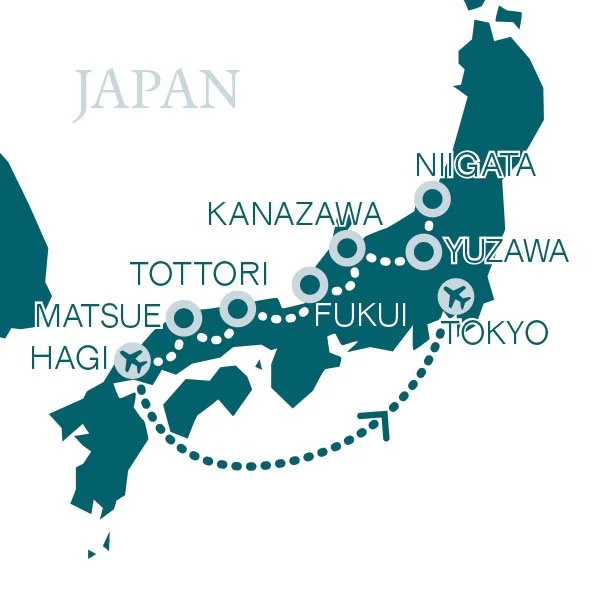
Niigata – 2 nights
Yuzawa – 2 nights
Kanazawa – 3 nights
Fukui – 2 nights
Tottori – 1 night
Matsue – 3 nights
Hagi – 3 nights
PRICE:
$14,950pp twinshare
SINGLE SUPPLEMENT:
$1,950 for sole use of a double room
DEPOSIT:
$1,500pp at time of booking
SECOND DEPOSIT:
$2,000pp due on 13 Jan 2027
FITNESS:
Above moderate: walking tours; standing in galleries and museums; removing shoes indoors at some sites; long coach drives on some days
GROUP SIZE:
Max. 16 places
GETTING THERE:
The tour starts in the lobby of our hotel in Niigata at 4.00pm on 13 May 2027
WAITLIST
Call us on (02) 8599 4201 or sign up to the waitlist below, to hear if places become available
-
Understand the influence of the daimyo feudal lords on trade, through the development of castle towns and the sponsorship of local crafts
Encounter traditional and contemporary art in Japan’s excellent regional galleries, and roam amongst the open-air sculptures of the Echigo–Tsumari Art Field
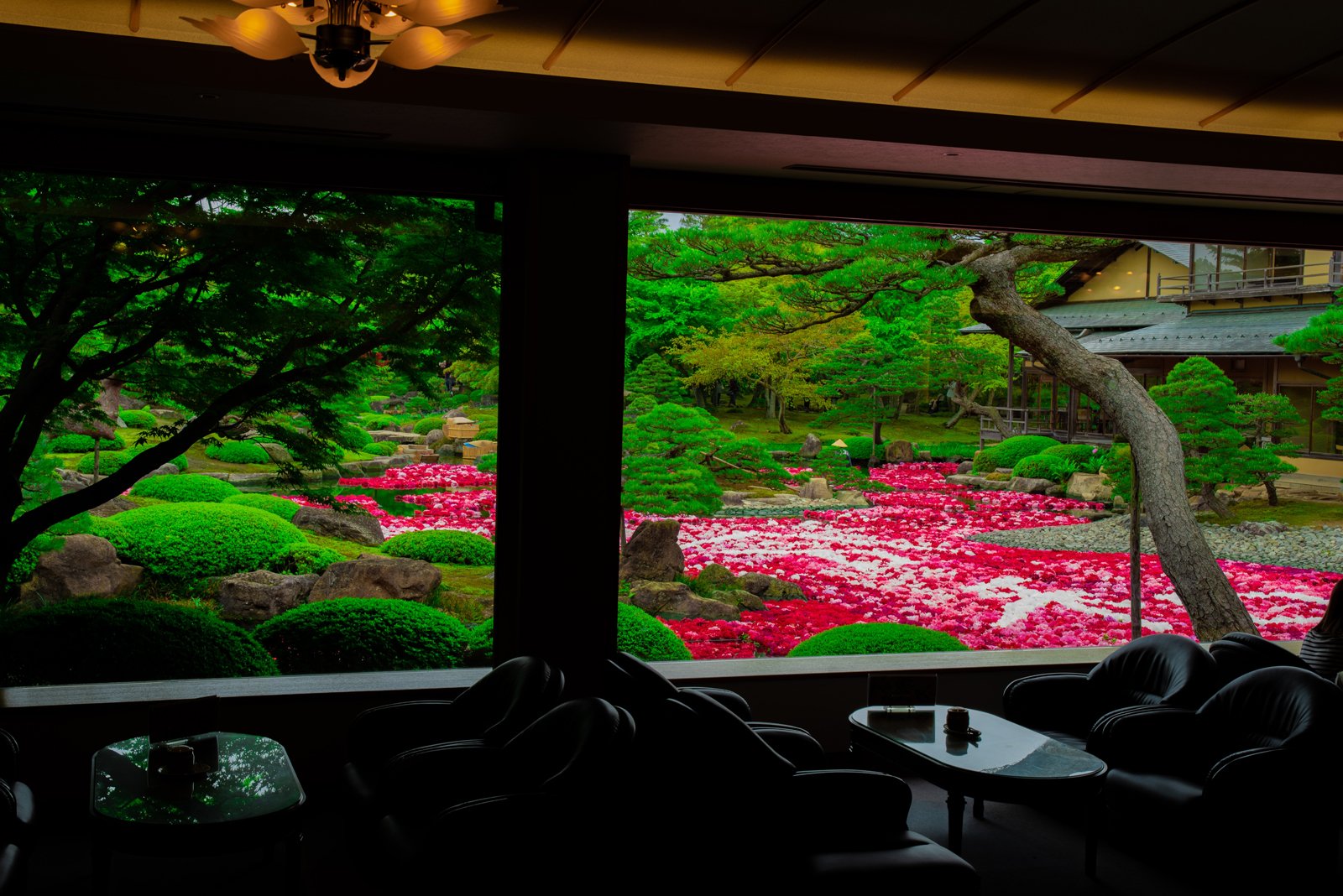
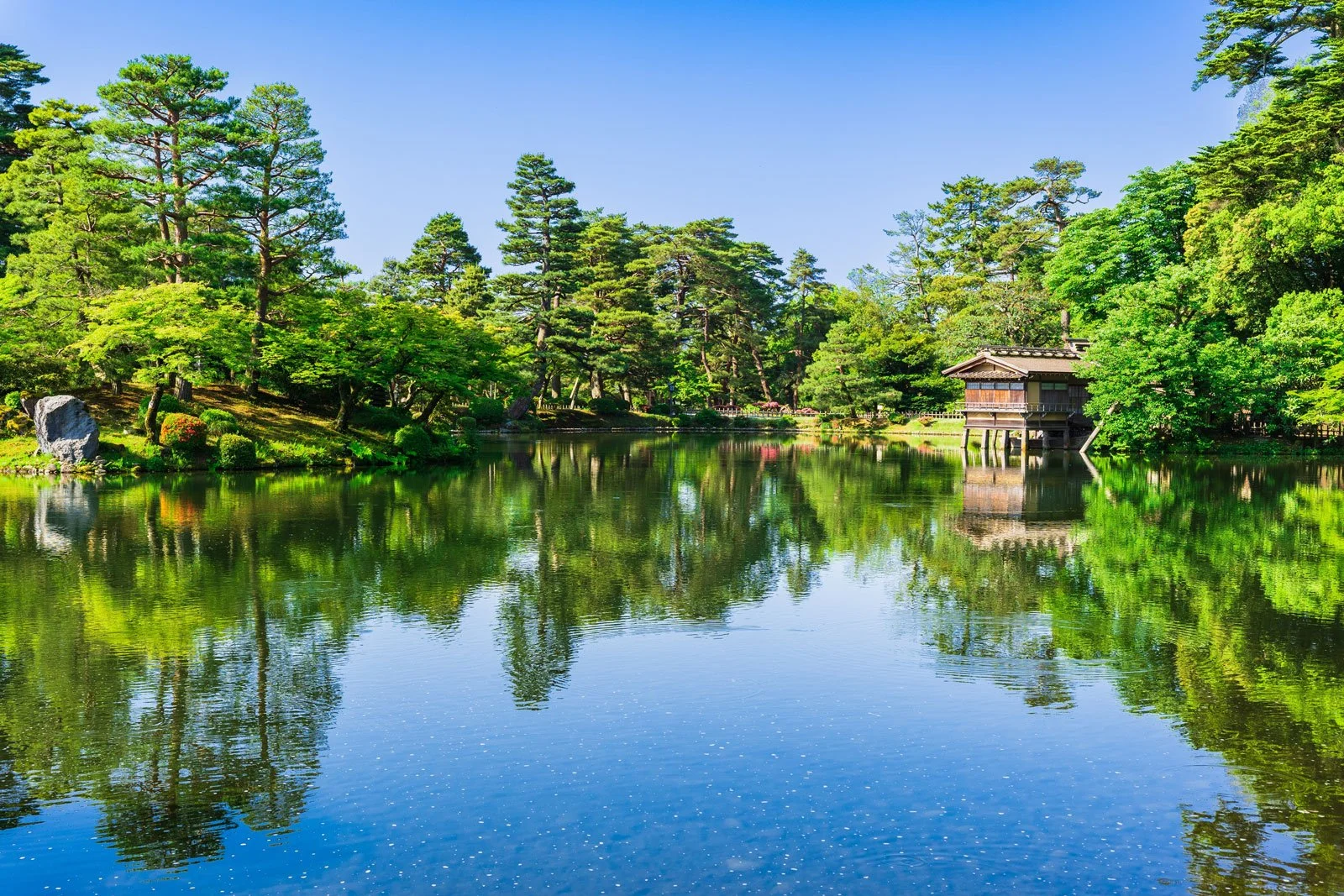
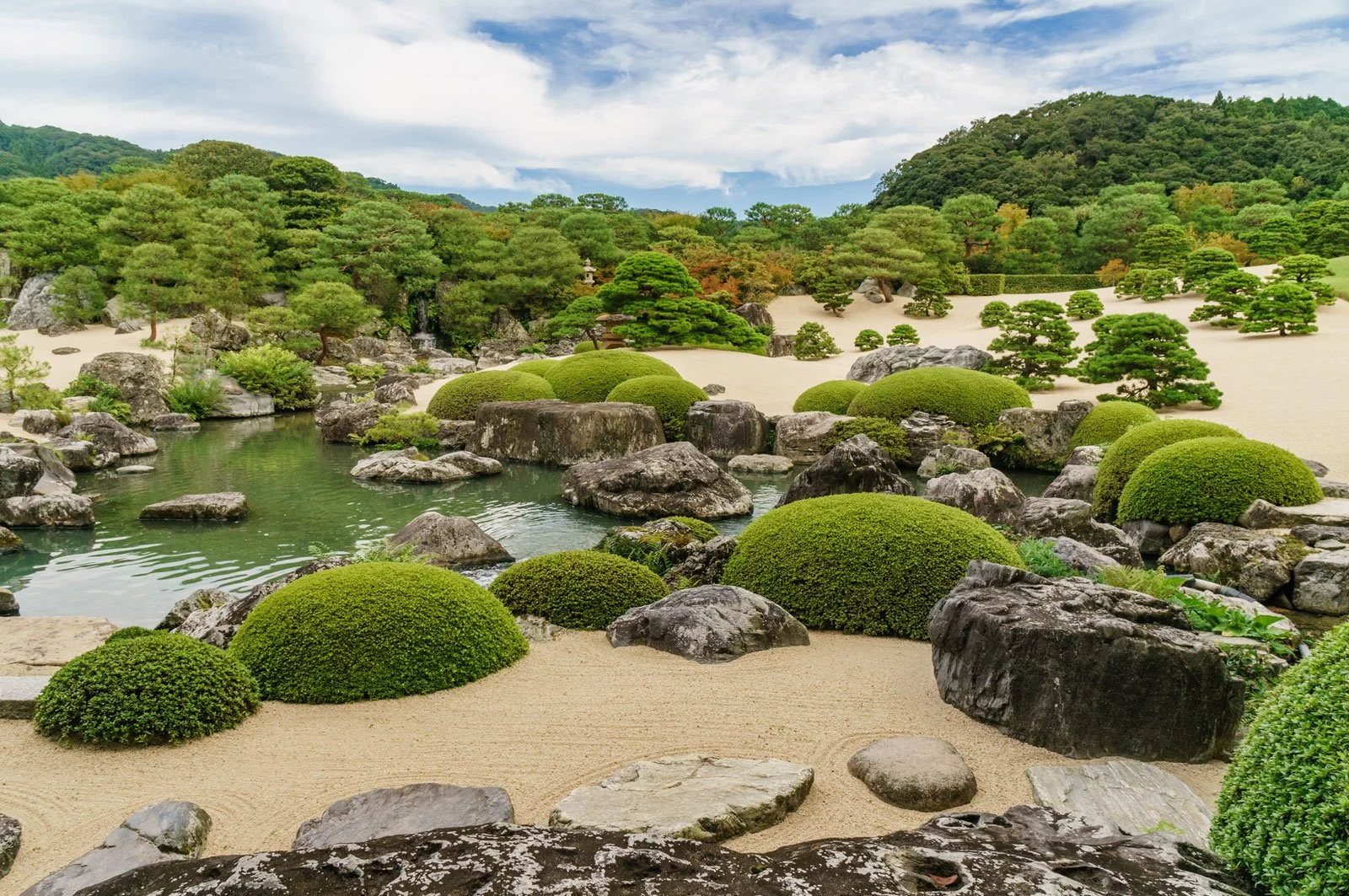
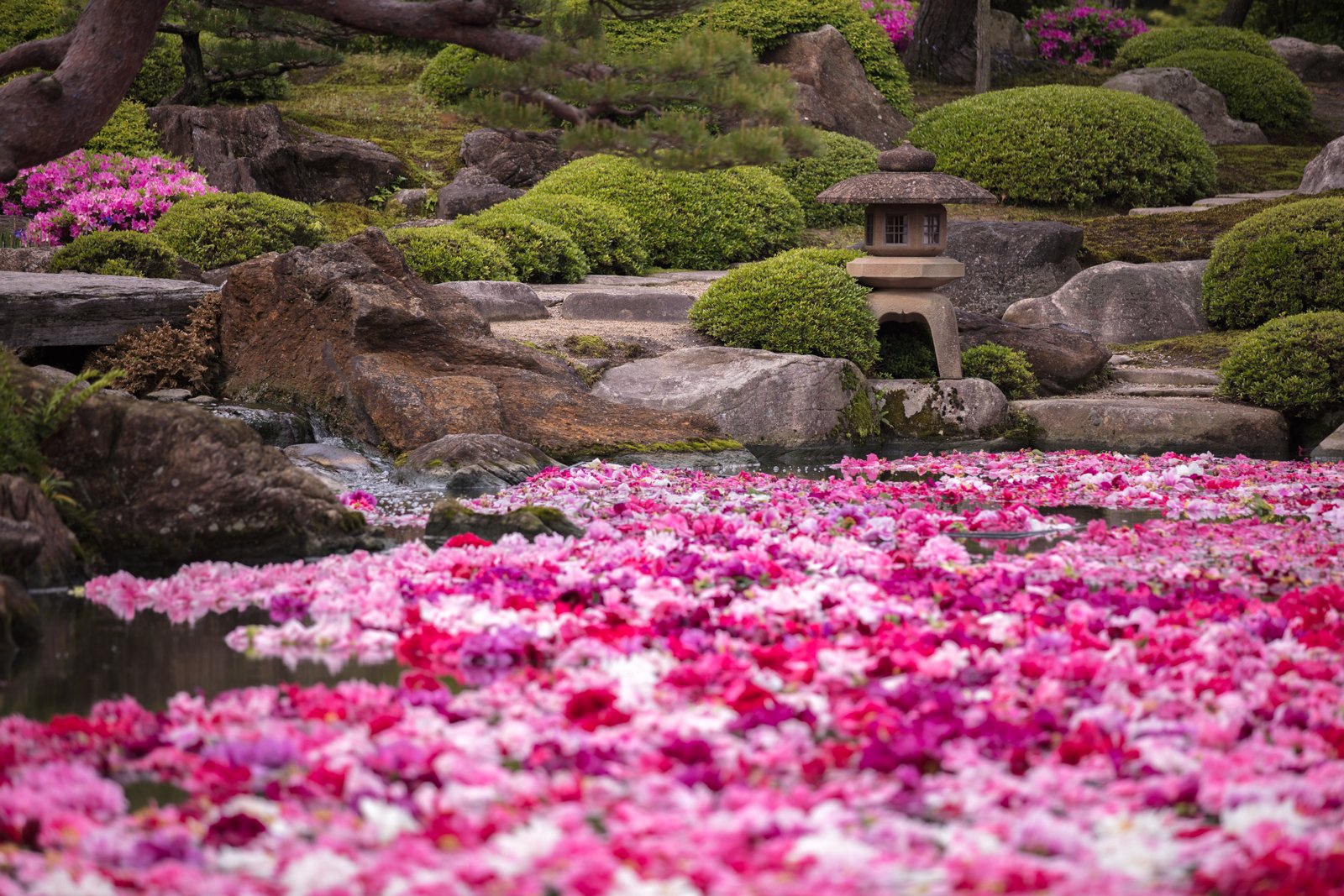
Admire some of Japan’s most celebrated gardens, including Kanazawa’s Kenroku-en, the Adachi Art Museum and the spectacular peonies of Yushien
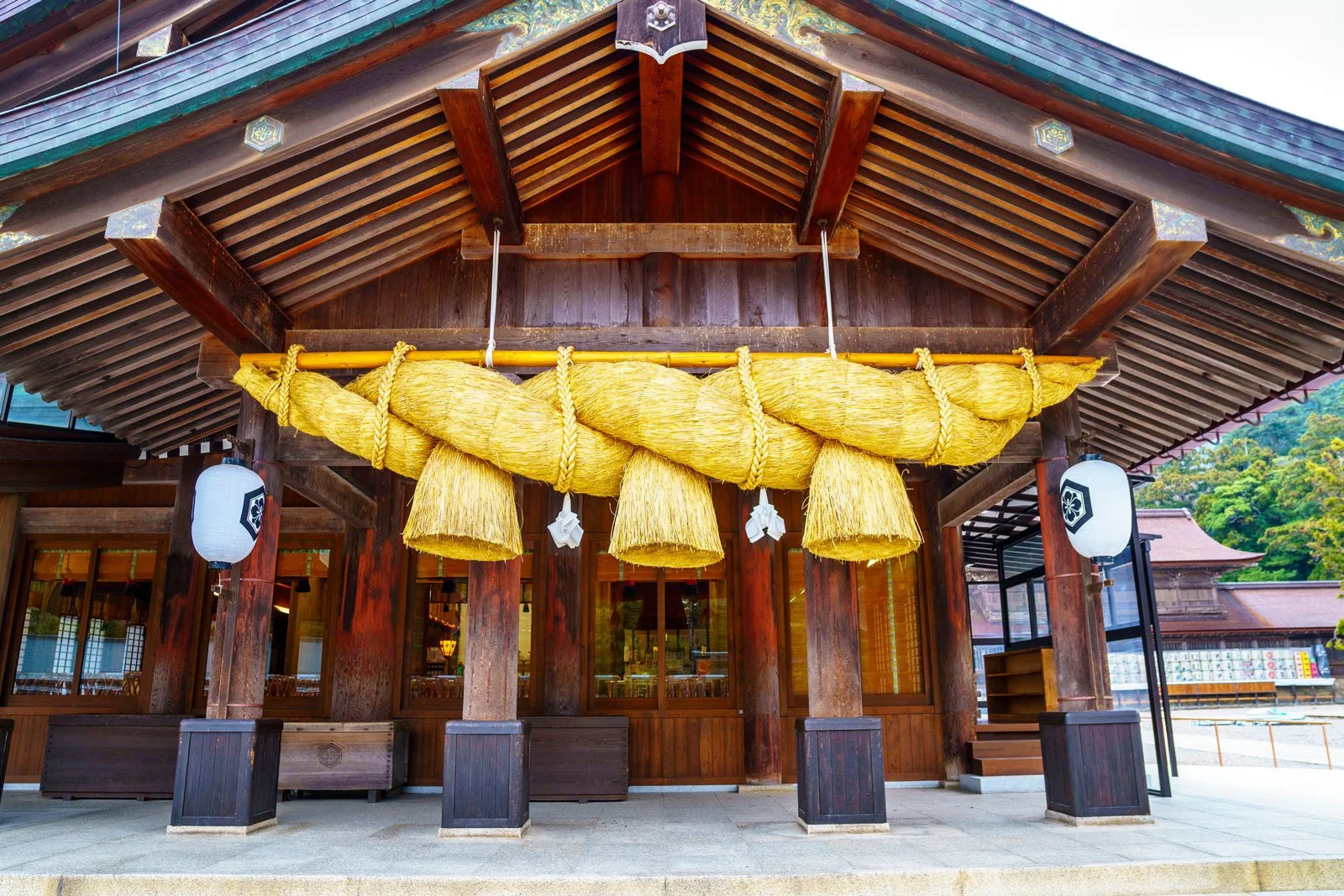
Experience peace and joy at Izumo Taisha, one of Shinto’s most sacred and oldest sites
Appreciate distinguished arts and crafts, from pottery and lacquerware to woodworking, gold leaf and inlaid metals
-
THURSDAY 13 MAY – ARRIVE IN NIIGATA (D)
The tour begins at 4.00pm in the lobby of our hotel in Niigata, when we meet with tour leader Dr Kathleen Olive and your fellow travellers to take an orientation stroll of our neighbourhood. There are frequent, convenient arrivals by the high-speed Shinkansen in Niigata from major cities such as Tokyo; contact us for further information on this and any other aspect of your travel arrangements to join this tour. After our orientation stroll, we continue to a local restaurant to enjoy a welcome dinner. Overnight Niigata.
FRIDAY 14 MAY – ART AND CULTURE IN NIIGATA (B)
Our first stop this morning is the Tsurui Museum of Art, which holds works donated by a Niigata businessman: modern and contemporary paintings, ceramics, calligraphy and sculpture. We continue to the Northern Culture Museum, which displays pieces by a renowned poet and local calligrapher, Yaichi Aizu and, together with the Japanese-style Saito Villa next door, provides an excellent example of architecture and garden design from the Taisho Period (1912-1926) in this prosperous trading post. After lunch at leisure, we enjoy a sake tasting inside the Furumachi Shinmeigu Shrine, where sake has been produced for use in Shinto religious ceremonies for one thousand years. We return to the hotel for an evening at leisure. Overnight Niigata.
SATURDAY 15 MAY – TEMPLES AND LIGHT (B, L, D)
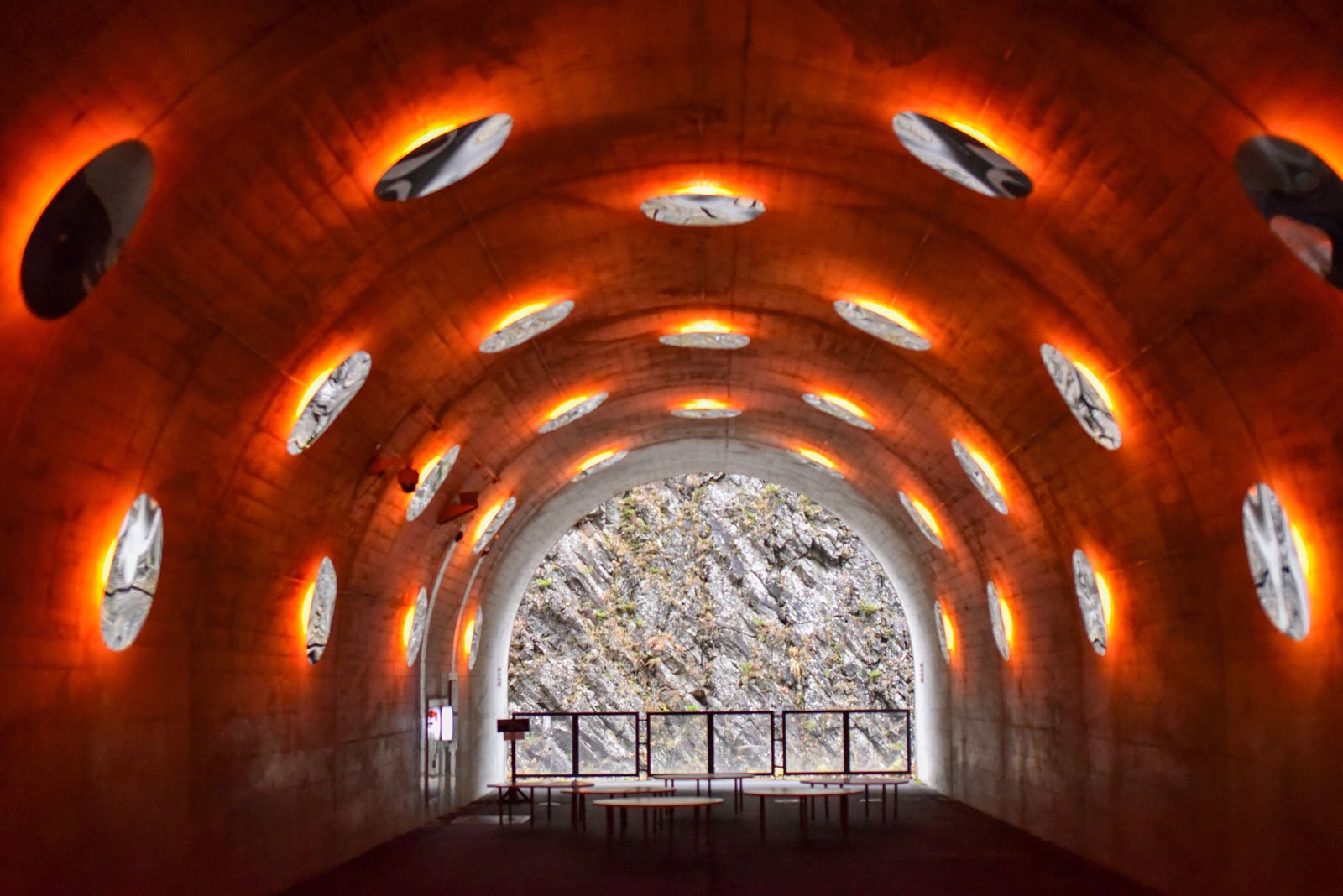
After checking out, we depart for Saifukuji Kaizando Temple to view the meticulously carved ceiling by master woodcarver, Ishikawa Uncho, whose exquisite work earned him the title ‘Michelangelo of Japan’. We continue to a local winery for a wine tasting and a lunch made with fresh local ingredients. After lunch, we call in at James Turrell’s House of Light, where the artist fuses the natural light of a traditional Japanese house with his own work, conceived for the first Echigo-Tsumari Art Festival in 2000. Later, we travel to Kiyotsu Gorge to experience the 750-metre ‘Tunnel of Light’ artwork created for the festival in 2018. The installation is covered with stainless steel panels reflecting the view of the surrounding landscape onto a mirror-like pool of water at the end of the tunnel. For those willing to get their feet wet, it’s possible to walk through the shallow water to the end of the tunnel for magnificent views of the gorge below. We continue to our accommodation in Yuzawa, and enjoy dinner in the hotel after we check in. Overnight Yuzawa
SUNDAY 16 MAY – ART IN THE OPEN (B, L)
This morning we depart by coach for the Echigo-Tsumari Art Fields, a landscape of modern art installations, by Japanese and international artists, that have been permanently placed among the rice fields following various Echigo-Tsumari Triennales. After a morning admiring the artworks, we enjoy a lunch of regional dishes overlooking the rice terraces before exploring the MonET (or Museum on Echigo-Tsumari). It displays pieces featured in the Triennale. We return to the hotel for an evening at leisure. Overnight Yuzawa.
MONDAY 17 MAY – TOYAMA (B, L)
Today after checking out, we depart for Kanazawa breaking the trip at Toyama for a light lunch and to visit the Glass Art Museum. Set in a striking modern building designed by starchitect Kengo Kuma, the museum houses an extensive collection of glass art from around the world, including an entire floor dedicated to Dale Chihuly’s spectacular Glass Art Garden installation. We continue to Kanazawa, where the evening is at leisure. Overnight Kanazawa.
TUESDAY 18 MAY – ARTS, CRAFTS AND GARDENS (B)
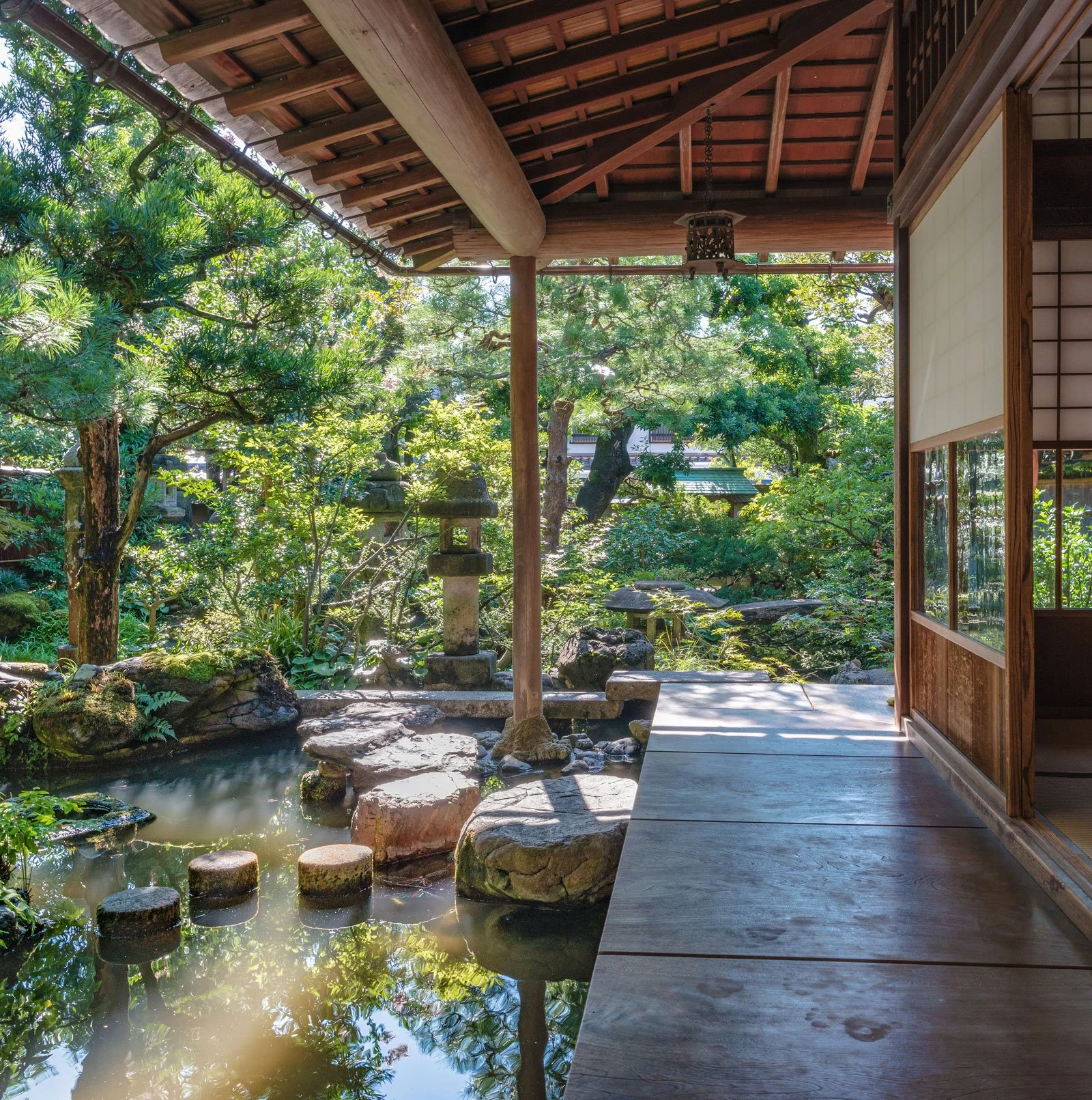
Kanazawa became an important castle town in feudal Japan under the powerful Maeda clan. We start the day at the elegant Edo period Seisonkaku Villa, built for the mother of the Maeda clan lord. The villa’s viewing deck offers uninterrupted views over Kenroku-en Garden, which can be accessed directly from the villa. The garden is designed to Chinese landscape theory, encompassing the six essential attributes of a beautiful garden. These include tranquillity, space, water features and magnificent views. The artisans in the Ishikawa region surrounding Kanazawa produce a superb range of traditional arts and crafts. The nearby Museum of Tradional Arts and Crafts showcases 36 specialist crafts from the area, including lacquerware, Kutani porcelain and silk-dyeing. There is free time for lunch from one of the many fresh produce and seafood stalls at Omicho market before a walking tour through the historic Nagamachi District where middle to high-ranking samurai resided. Here, the sixteenth-century Nomura samurai house and garden has been faithfully preserved, with original carved cypress panels and painted screen doors. We return to the hotel for an evening at leisure. Overnight Kanazawa.
WEDNESDAY 19 MAY – CONTEMPORARY KANAZAWA (B)
This morning we visit the D.T. Suzuki Museum, a monument to the modern Zen scholar and a striking example of contemporary and minimalist Japanese architecture interacting with the long tradition of Zen garden design. Nearby, at the 21st Century Museum of Contemporary Art, there is time to explore the temporary exhibitions in one of Japan’s best-known art museums. Overnight Kanazawa.
THURSDAY 20 MAY – TO FUKUI (B, L)
This morning we head south, hugging the coastline of the Sea of Japan en route to Kaga, a picturesque town with a rich cultural heritage. Maki-e is one of the decorative techniques used in Japanese lacquerware, with patterns and pictures drawn and then dusted with gold or silver to highlight the designs. We experience this time-honoured tradition on a visit to a maki-e workshop; there is time to experiment with your own lacquer masterpiece before we enjoy lunch together. We continue to Fukui where our visit coincides with the annual three-day Mikuni Festival. This 300-year-old festival celebrates the region’s cultural and maritime heritage and the main event takes place on the afternoon of our arrival: a vibrant procession of floats up to 6.5 metres tall, mikoshi (portable shrines), and colourful banners accompanied by traditional taiko drums are paraded through town from the Mikuni shrine. After the festival concludes, we check in to our hotel. The evening is at leisure. Overnight Fukui.
FRIDAY 21 MAY – TEMPLES AND RUINS (B, L)
A more serene experience lies ahead today as we head to Daihonzan Eiheji, The Temple of Eternal Peace, a large complex and active monastery where Soto Zen Buddhism has been practised since 1244. The temple’s location on a cedar-covered mountain slope provides the perfect backdrop for quiet contemplation and meditation. We continue to lunch and visit the Ichjōdani Asakura Clan Ruins, the restored townscape of merchant houses and samurai residences, a one thriving castle town built by the Asakura clan, a powerful Daimyo family during the Muromachi period. The adjacent Ichjōdani Asakura Family Site Museum displays excavated artefacts and important objects recovered from the site. We return to Fukui where the afternoon and evening is at leisure. Overnight Fukui.
SATURDAY 22 MAY – TO TOTTORI (B)
After checking out we have a full day on the road as we travel to Tottori by private coach. Along the way, we stop to stretch our legs and to enjoy a coffee and a simple lunch before continuing to our hotel in Tottori. This evening is at leisure. Overnight Tottori.
SUNDAY 23 MAY – TEMPLES AND GARDENS (B, L)
Before we depart Tottori, we visit Kanon-in Temple Garden. Designated a national place of scenic beauty, the landscape garden, established in the 1600s, is the focal point of the temple. We admire it over matcha tea and traditional Japanese sweets. Outside of Tottori, at the foothills of Mount Daisen, is the Tottori Prefectural flower Park. The spectacular seasonal plantings throughout the enormous open garden and in the futuristic flower dome ensure the garden is awash with colour regardless of the season. Lunch is at the flower park before we continue to Matsue and check into our hotel. This evening is at leisure. Overnight Matsue.
MONDAY 24 MAY – ART IN MATSUE (B)
We begin today at the Adachi Museum of Art, a passion project combining the founder and local businessman Adachi Zenko’s love of art and garden design. The museum is unique, combining its collection of twentieth-century Japanese paintings and world-famous ‘borrowed scenery’ garden: the latter is experienced as a living artwork through the gallery windows. We return to Matsue with free time to enjoy lunch overlooking Lake Shimane, at the Shimane Art Museum. The museum’s design symbolises harmony with the water and shoreline and many of the exhibits are based around the theme of water, including a large collection of ukiyo-e woodblock prints by Hokusai. We return to the hotel for an evening at leisure. Overnight Matsue.
TUESDAY 25 MAY – HISTORIC MATSUE (B, L)
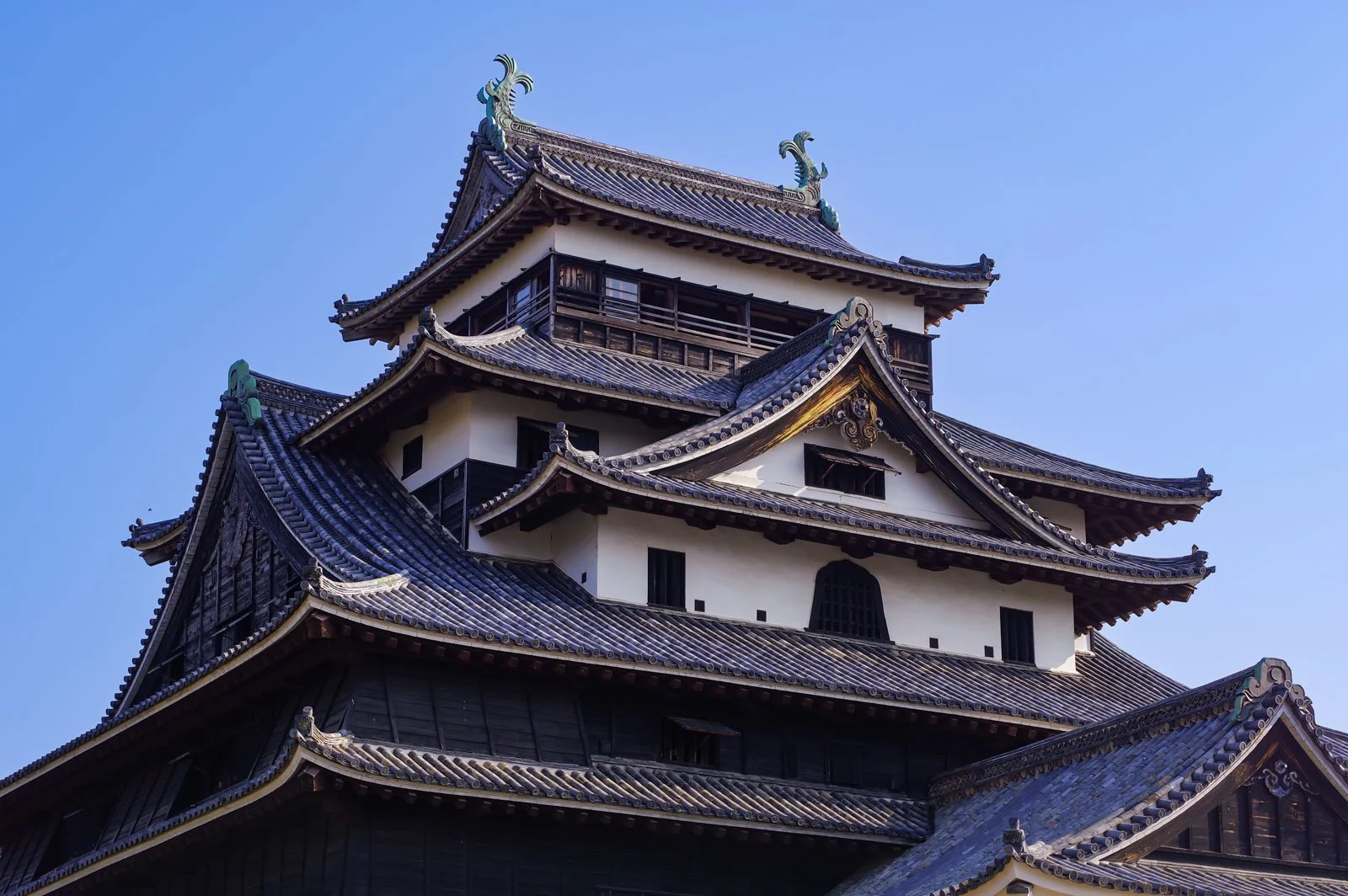
Situated on Daikon Island, Yushien Garden is celebrated for its indoor and outdoor displays of peonies and highly-prized Korean ginseng. A traditional ‘stroll garden’ built around ponds, Yushien’s design places the landscapes of Izumo against a backdrop of seasonal flowers, rock gardens, stone lanterns and waterfalls. We explore the garden and enjoy lunch before heading to Matsue Castle, one of only a handful of original castles remaining in Japan. Our guided visit takes us through the extensive grounds and inside the main keep, which retains its original wooden features. Nearby are the museum and residence of Lafcadio Hearn, a writer whose books introduced Japan to the West. Hearn moved to Matsue as an English teacher in 1890 and married the daughter of a samurai family, adopting Japanese citizenship. Also in the area is Matsue Bukeyashiki, a well-preserved former residence and garden of a middle-ranking samurai. Returning to the hotel, the evening is at leisure. Overnight Matsue.
WEDNESDAY 26 MAY – ANCIENT IZUMO (B, L, D)
Izumo predates Nara and Kyoto in Japan’s mythology, as recorded in the ancient chronicles that document the first deities and the story of the land’s creation. After checking out this morning, our destination is Izumo Taisha, considered one of the most important and oldest shrines in Japan. Approached from a path of pine trees, the Oracle Hall is adorned with sacred straw ropes that separate the divine realm from the mortal world, and indicate the presence of Okuninushi or the creation deity enshrined within. After lunch in a local restaurant we drive to Hagi, our destination for the next three nights. Dinner is in the hotel this evening. Overnight Hagi.
Please note: Hagi is a small coastal town not often visited by western tourists but revered by Japanese travellers for the healing waters of its hot springs. Our traditional ryokan-style hotel features 14 different ways to enjoy the hot springs within the hotel. Our allocated rooms are 44sqm in size with Western-style twin beds with a combined shower and bath. Please contact us if you anticipate any accessibility issues.
THURSDAY 27 MAY – HISTORIC HAGI (B, L)
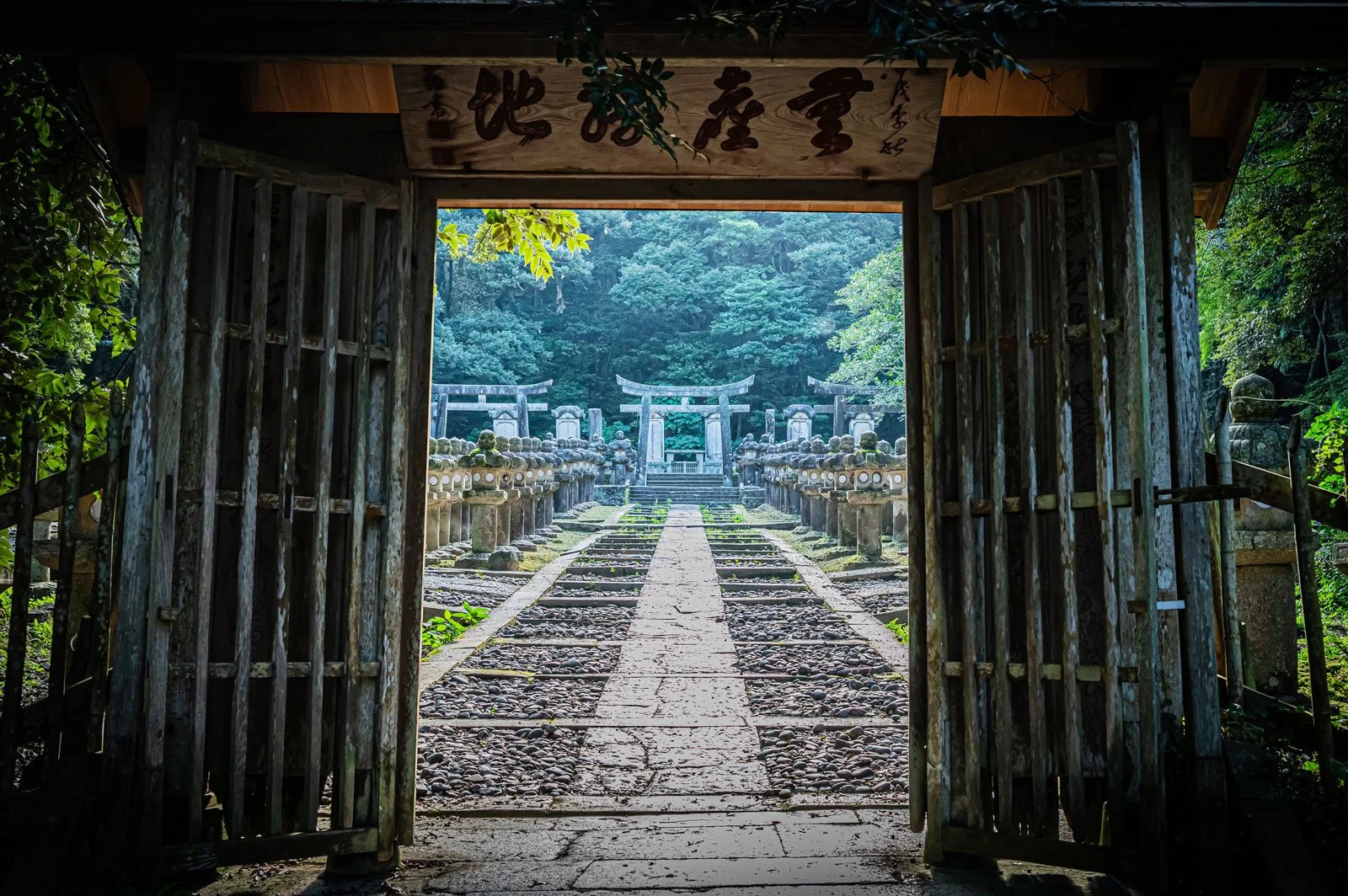
The former castle town of Hagi is not on the radar of international tourism, but it played a significant role in Japan’s industrial modernisation and witnessed the end of samurai rule with the overthrow of the Shogun in the Meiji era. Today, we visit the Meirinkan History Museum, a former school for the education of local lords. The museum depicts the history behind the final years of the feudal era. We continue to the charming residential area lining the Aiba waterway, a canal system used in the Edo period for transporting goods such as rice and firewood and irrigating fields. During a guided tour of the elegant Yukawa residence, we understand how the waterway was used in daily life for cooking, washing and cleaning. There is time before lunch to stroll through the quiet neighbourhood where shops sell the local Hagi-yaki pottery and at Tokoji Temple we encounter a large graveyard of moss-covered stone lanterns that honour the Mori feudal lords who governed Hagi. We return to the hotel where the evening is at leisure. Overnight Hagi.
FRIDAY 28 MAY – HAGI CASTLE TOWN (B, D)
Today on a walking tour we explore the castle town area, an impeccably preserved example of a feudal Japanese town that gives Hagi its Japanese nickname of “Hidden Kyoto”. The area prospered as the capital of the powerful Mori clan during the feudal period, and the preserved earthen walls, former samurai mansions and merchants’ quarters evoke the prominence of the castle that no longer survives. The afternoon is at leisure for independent exploration or a final bit of shopping, before we gather to enjoy our farewell dinner. Overnight Hagi.
SATURDAY 29 MAY – DEPARTURE (B)
We check out today and travel by private coach, together with our luggage, to Hagi Iwami Airport. Here we take our group domestic flight to Tokyo’s Haneda International Airport. Our late morning flight arrives in time for evening departures to Australia, while those continuing their journey within Japan can travel easily into central Tokyo. Contact us before booking your flights, to ensure that your departure airport and flight time coincide with our tour itinerary. Tour arrangements conclude on arrival at Haneda International Airport.
-
Hotel Okura 4* Niigata, 2 nights
https://www.okura-niigata.co.jp/
NASPA New Otani Hotel 4* Yuzawa, 2 nights
ANA Crowne Plaza 4.5* Kanazawa, 3 nights
https://www.ihg.com/crowneplaza/hotels/us/en/ishikawa/qkwja/hoteldetail
Courtyard by Marriott 4* Fukui, 2 nights
https://www.marriott.com/en-us/hotels/kmqcy-courtyard-fukui/overview/
Hotel New Otani 4* Tottori, 1 night
https://www.newotani-tottori.jp/
Onyado Nono 3* Matsue, 3 nights
https://dormy-hotels.com/dormyinn/hotels/nono_matsue/
Hagi Honjin Hagi, 3 nights
NB: hotels of a similar standard may be substituted. Note that, in Japan, twin-bedded rooms are for sharing and double-bedded rooms are limited. Contact us for further information.
-
16 nights’ accommodation at 3*, 4 and 4* Superior hotels
All breakfasts and 13 lunches or dinners
All ground transport, guided tours and entrance fees to sites as mentioned in the itinerary, and tipping
One-way flights in Economy class, from Hagi to Tokyo Haneda airport
Commentary by and expertise of an Australian tour leader throughout
Assistance of a Japanese-speaking national guide throughout
-
A $1,500pp deposit is required at the time of booking to hold your place on tour.
A second deposit of $2,000pp is due on 13 January 2027.
We will invoice you for final payment for the tour, due on 26 February 2027.
-
When you book on one of tours, we ask you to accept our terms and conditions. You can read our terms and conditions here.